How to Improve Your CIBIL Score: The Complete 600-to-750+ Guide
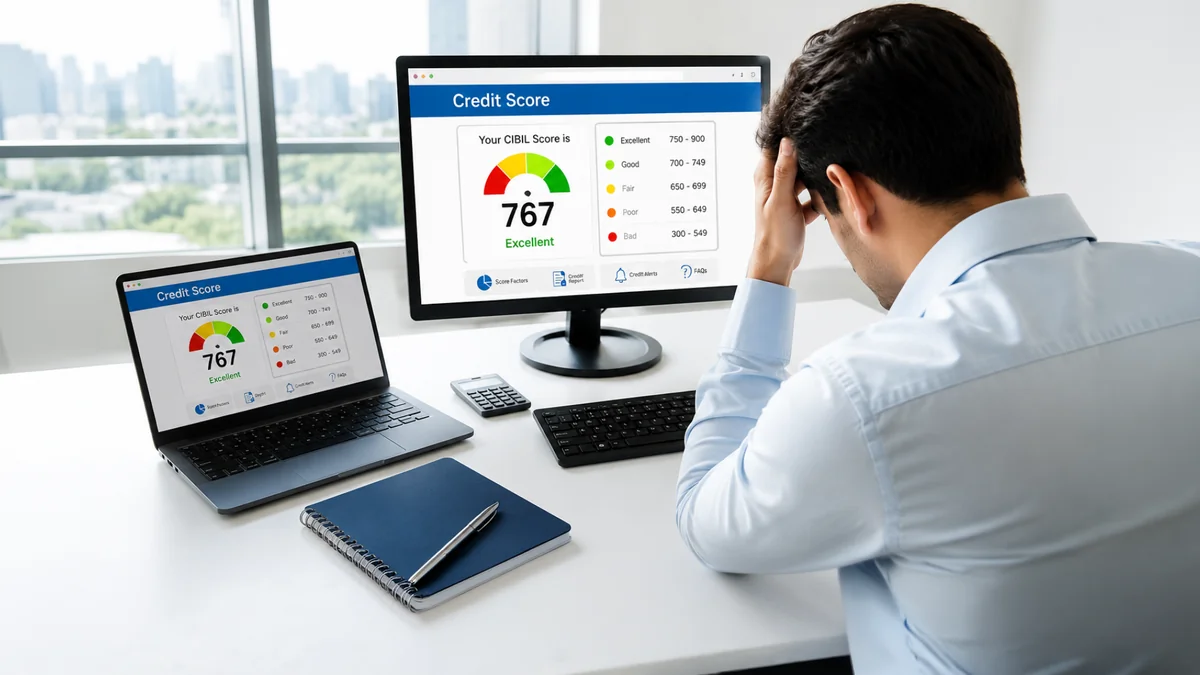
When Amit applied for a personal loan last year, the bank rejected him within 24 hours. His reason? A CIBIL score of 580, too risky for prime lending rates. He felt stuck, unsure whether improvement was even possible. Eight months later, after following a disciplined strategy, his score hit 745. The next loan he applied for came with a 10.5% interest rate instead of the 15% he'd have paid before.
This story repeats thousands of times across India. Your CIBIL score isn't a life sentence; it's a financial report card that reflects your recent behavior, and behavior can change.
But here's what most articles won't tell you: improving your score from 600 to 750 isn't a mystery, but it's also not a sprint. There are real quick wins that show results in 30 days, and there are foundational habits that compound over 6-12 months. Mixing them up, expecting habits to work fast or quick wins to last forever, is where most people fail.
This guide separates the two and gives you a realistic roadmap based on where you are today and where you want to go.
What is a CIBIL Score and Why Your Bank Cares More Than You Think
Your CIBIL score is a three-digit number between 300 and 900, generated by TransUnion CIBIL, India's primary credit rating agency. It's calculated based on your borrowing and repayment history, boiled down into a single number that tells lenders: "How risky is this person?"
Here's what the ranges actually mean:
- 300–549 (Poor): Loan approvals unlikely; if approved, expect 16%+ interest rates
- 550–700 (Fair): Approvals possible, but limited options; rates typically 13–15%
- 700–750 (Good): Better approval odds; mainstream lenders interested; rates 10–12%
- 750+ (Excellent): Highest approval odds; premium products; rates 8–10%
The difference between a 600 and a 750 score? On a ₹10 lakh personal loan over 5 years, you'd pay roughly ₹50,000 more in interest. That's the real cost of a low score.
Banks use your CIBIL score to determine three things: whether to approve you, how much to lend, and what interest rate to charge. It's not the only factor, your income, employment stability, and existing debt matter too, but it's the fastest filter. A low score triggers instant rejection at most mainstream lenders.
The 30-Day Quick Wins: Start Here, See Results Fast
If your score is underwater and you need a psychological win fast, these three moves can improve your score by 20–100 points within a month. They're not permanent fixes, but they're real improvements with measurable timelines.
1. Check Your Report for Errors (The Fastest Possible Improvement)
This is where most people miss easy points. Your CIBIL report can contain errors, wrongly marked defaults, closed accounts still showing as open, duplicate entries, incorrect outstanding balances. Each error drags your score down unfairly.
Ramesh discovered this the hard way. His score was stuck at 620, and he couldn't figure out why. When he pulled his free CIBIL report, he found a ₹50,000 credit card bill marked as defaulted, a bill he'd paid off three years ago. A disputed entry in the bank's records. He raised a formal dispute with TransUnion CIBIL in week one; the error was corrected by week five. His score jumped to 660, a gain of 40 points from a single correction.
How to do it:
- Visit the official TransUnion CIBIL website (transunion.co.in/consumer)
- Request your free annual report
- Review: payment history, active accounts, closed accounts, inquiries, defaults
- Spot an error? Raise a dispute immediately, TransUnion has 30-45 days to investigate
- Get written confirmation from your bank of their correction
Impact: +20 to +100 points within 30–45 days, depending on error severity.
2. Make a Strategic Prepayment on Your Highest Credit Card Balance
Credit utilization, the percentage of available credit you're using, impacts your score within 15 days of reporting to the bureau (RBI mandates updates every 15 days). This is faster than payment history changes.
Sneha was carrying a ₹60,000 balance on an ₹80,000 credit limit (75% utilization, very high). She couldn't pay it off entirely, but she scraped together ₹30,000 and paid it down. Her utilization dropped to 37.5%, still high but notably better. Within 15 days, her score moved from 640 to 655.
How to do it:
- Identify your highest-balance credit card
- Pay down at least 50% of the balance if possible
- If you can't, reduce utilization to below 50%
- Ideal target: Below 30% of your credit limit
Impact: +10 to +30 points within 15 days.
3. Pay Off All Outstanding Dues Immediately
If you have overdue credit card balances or defaulted loans, paying them off signals an immediate behavioral change to lenders. It doesn't erase the history, but it stops the bleeding.
Impact: +20 to +50 points immediately; prevents further damage.
The Foundation: 8 Proven Strategies for Real Score Improvement
Quick wins plateau fast. To move from 600 to 750, you need consistent behavior changes that compound over months. Here's the exact framework:
Strategy 1: Nail Your Payment History (35% of Your Score)
This is the heaviest weight. Missing a single EMI or credit card payment can drop your score 50–100 points. Late payments stay on your report for seven years. If you want to improve your score, this is non-negotiable.
Payment history is so critical that three to six months of clean payments can offset other weaknesses. Set up automatic debits for all EMIs and credit card bills. Pay on your bank's due date, not the last possible minute. Better yet, pay a week early to ensure the payment clears in time.
Data point: Someone with two consecutive months of on-time payments is already rebuilding credibility in the eyes of lenders.
Strategy 2: Optimize Your Credit Utilization Ratio (30% of Your Score)
This is the second-fastest factor to improve after errors. Your utilization ratio = (Amount used / Total credit limit) × 100.
If you have a ₹1 lakh credit limit and carry a ₹75,000 balance, your utilization is 75%, a red flag signaling credit dependence. Lenders see this and assume you're living paycheck-to-paycheck. Keep it below 30%; below 10% is excellent.
The good news: You don't need to pay off the balance entirely. Request a higher credit limit from your bank, or strategically pay down mid-cycle to reduce utilization. Changes show within 15 days.
Strategy 3: Build a Healthy Credit Mix (20% of Your Score)
A credit mix means having different types of credit: secured loans (home, auto) and unsecured credit (credit cards, personal loans). Lenders want to see you can manage multiple credit types responsibly.
If you only have credit cards, consider a small personal loan for a genuine need and repay it on time. If you only have loans, add a credit card. But, and this is critical, don't take credit you don't need just to improve your score. The interest cost usually outweighs the score benefit.
Strategy 4: Keep Old Credit Cards Active (15% of Your Score)
Your credit age matters. Closing old cards actually hurts your score because it reduces your average credit age and total available credit. If you have a card you've held for five years, keep it open even if you don't use it regularly. Make a small transaction every few months if the annual fee is reasonable.
Strategy 5: Minimize Hard Inquiries (5% of Your Score)
There's a critical distinction: Soft inquiries (you checking your own score) have zero impact. Hard inquiries (a lender checking your score for new credit) each deduct 5–10 points. Multiple hard inquiries in a short period signal desperate borrowing to lenders.
Avoid applying for multiple loans or credit cards within 30 days. Hard inquiries fall off your report after 12 months.
Strategy 6: Dispute Inaccuracies on Your Report
We covered this briefly, but it deserves emphasis. A single corrected error can add 50–150 points. Make it a habit: review your CIBIL report quarterly for inaccuracies. Dispute them immediately.
Strategy 7: Use a Secured Credit Card (If Score < 600)
A secured credit card is collateralized by a fixed deposit. You deposit ₹50,000; the bank gives you a ₹50,000 credit limit. It's easier to get approved with a low score, and responsible use rebuilds your history fast.
Spend 10–20% of the limit monthly; pay in full every month. After 6–12 months of perfect payments, you've built enough positive history to apply for unsecured cards, and your score will reflect the effort.
Strategy 8: Consider a Credit Builder Loan
A credit builder loan is a small loan designed specifically for rebuilding credit. You borrow ₹25,000, for example; the bank holds it in escrow; you repay it in small installments over 12 months. Each on-time payment is reported to credit bureaus, building positive history without risk.
It costs more in interest (12–15%), but the small amount keeps the cost manageable, roughly ₹300–400 per month, and the impact on your score is measurable within 3–6 months.
How Long Does It Actually Take? Realistic Timelines
Let's cut through the hype. Here's what really happens:
30 Days: Error corrections can add 20–100 points. Prepayments and clearing dues add 10–50 points. Total possible: +100 to +150 points if you hit all three.
3–6 Months: Consistent on-time payments add 30–50 points. Reduced utilization adds 20–40 points. A new secured card starts showing positive history. Typical improvement: +100 to +150 points if you're consistent.
6–12 Months: This is where momentum builds. Six months of perfect payment history, combined with lower utilization and emerging positive credit mix, creates compound improvement. Most people jump 100–200 points in this phase. Someone at 600 typically reaches 700–720 by month 9–10.
12+ Months: Your score stabilizes and continues improving as older negative information ages off your report. Hard inquiries from 12+ months ago disappear. You've established credibility.
The harsh reality: There is no instant fix that lasts. Anyone promising a 100-point improvement in 30 days is either talking about error corrections (which may not apply to you) or misleading you. Real, sustainable improvement requires 6–12 months of consistent behavior.
What to Do Once You Hit Each Milestone
Your improving score should unlock new financial opportunities. Here's what becomes possible at each level:
At 600–650: You qualify for secured credit cards and credit builder loans. Non-prime personal loans become available (14–18% interest). These products are stepping stones; use them to build further history.
At 700: The landscape shifts. Prime personal loans (9–12% interest), better credit cards, and home loans from HFCs become realistic. This is when you should start comparing products carefully, as the difference between 8% and 12% interest compounds significantly.
At 750+: You're in excellent territory. Lowest personal loan rates, premium credit cards, mainstream bank home loans, and flexible terms all become accessible. This is when your improved score actually translates to wealth-building through lower borrowing costs.
Here's the smart play: Use PaisaOne to compare products at each milestone. When you're ready to apply for a loan, comparing options via one marketplace with transparent rates prevents wasting hard inquiries on individual applications. Every comparison from a single portal counts as one hard inquiry, not five. That's how you optimize your score while accessing better products.
FAQ: Your Burning CIBIL Score Questions, Answered
Q: Can I improve my CIBIL score without taking new credit?
Yes, mostly. Paying existing bills on time, reducing utilization, and correcting errors improve your score without new credit. However, building credit mix requires new credit. Strategy: If your score is below 650, focus on payment history and utilization first. Consider new credit (a secured card or small personal loan) once you hit 700.
Q: How many times can I check my CIBIL score?
Unlimited. Checking your own score is a soft inquiry with zero impact. Only hard inquiries from lenders damage your score.
Q: Should I close old credit cards?
No. Closing cards reduces your credit history length and available credit, worsening your score. Keep them open but inactive.
Q: Is a score of 600 really that bad?
It's below-average, but not a dead end. You can get loans at 13–15% interest. A 750 score gets you 9–11% interest. Over a ₹10 lakh loan, that difference is ₹50,000+.
Q: How do I know my improvement is real?
Download your updated report from TransUnion CIBIL every 30 days. You should see modest gains (20–50 points) by month 3, and significant gains (100–200 points) by month 9.
Q: Is there any way to improve faster?
Dispute corrections and strategic prepayments show fastest results (15–30 days). But sustainable improvement always takes 6–12 months. Anyone promising faster doesn't understand credit scoring.
Your Next Step: From Improvement to Action
Improving your CIBIL score is a journey, not a destination. The goal isn't to hit 750 and stop; it's to maintain 750+ and use that credibility to access better financial products, lower-interest loans, premium credit cards, and flexible terms.
Start with the 30-day quick wins: check your report for errors, make a strategic prepayment, and set up automatic bill payments. In parallel, map out your 6–12 month plan: consistent on-time payments, reduced utilization, and credit mix diversification.
Then, as your score improves, use platforms like PaisaOne to compare what becomes available to you. A score of 700 unlocks different products than 650. A score of 750 unlocks different rates than 700. The improvement only matters if you leverage it.
The best time to improve your CIBIL score was three years ago. The second-best time is today. Start now, stay consistent, and in a year, you'll wonder why you didn't begin sooner.

Divya
Divya Kumari is an SEO & Content Strategist with experience in organic traffic growth, topical authority building, and content-led SEO strategies. She specializes in creating user-focused content for finance and SaaS websites, helping brands improve visibility through structured content planning, internal linking, and search optimization techniques.