What Is CIBIL Score? Definition, Ranges & How It Affects Your Loan Approval
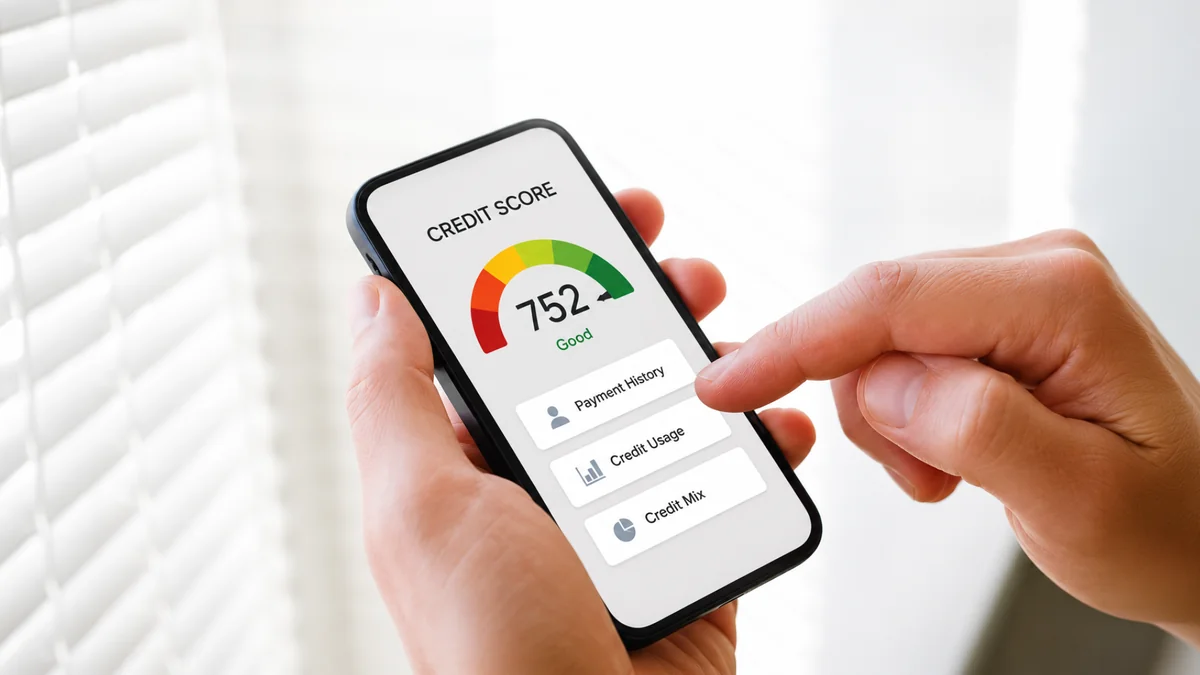
TABLE OF CONTENTS
What Is CIBIL Score? Definition, Ranges & How It Affects Your Loan Approval (2026)
- Introduction
- What Is CIBIL Score? Definition & Full Form
- What Does CIBIL Stand For?
- What Is a CIBIL Score (Definition)?
- Why Does the Range Start at 300?
- CIBIL Score Ranges: What Each Number Means
- Below 600: Poor Credit Profile
- 600-649: Doubtful Credit
- 650-699: Fair Credit
- 700-749: Good Credit
- 750-900: Excellent Credit
- How Is Your CIBIL Score Calculated?
- Payment History (35% weight)
- Credit Utilization Ratio (30% weight)
- Credit Mix (15% weight)
- Credit Age (10% weight)
- New Credit Inquiries (10% weight)
- What CIBIL Score Do I Need to Get a Loan?
- Personal Loans
- Credit Cards
- Home Loans
- Loans Against Property (LAP)
- How to Check Your CIBIL Score (Free Methods)
- Official CIBIL Website
- Google Pay (Monthly Free Checks)
- Via PaisaOne
- How to Improve Your CIBIL Score: 6 Actionable Steps
- Pay Everything on Time
- Reduce Credit Card Utilization
- Don't Close Old Credit Cards
- Avoid Multiple Loan Applications
- Maintain Diverse Credit
- Check Your CIBIL Report for Errors
- CIBIL vs. Other Credit Bureaus: Which Matters Most?
- CIBIL (TransUnion CIBIL)
- Experian
- Equifax
- CRIF High Mark
- Frequently Asked Questions
- Next Steps: Apply for the Right Loans Based on Your Score
- Your score is 750+
- Your score is 700-749
- Your score is 650-699
- Your score is below 650
Think of your CIBIL score as your financial report card in India's lending system. It's a three-digit number that summarizes your creditworthiness and determines whether you'll get approved for loans, credit cards, and what interest rates you'll pay. In a country where over 550 million people are tracked by credit bureaus, understanding your CIBIL score isn't optional, it's essential to your financial health.
At PaisaOne, we've analyzed how this score impacts real loan approvals across 2,000+ products from banks and NBFCs. Here's what you need to know.
What Is CIBIL Score? Definition & Full Form
CIBIL stands for Credit Information Bureau (India) Limited. It's India's oldest and most-used credit bureau, now owned by TransUnion (a US multinational credit reporting company). So when lenders talk about your "CIBIL score," they specifically mean the score issued by TransUnion CIBIL.
A CIBIL score is a three-digit numeric summary of your credit history, ranging from 300 to 900. The closer your score is to 900, the better. Higher scores indicate stronger creditworthiness, essentially, they tell lenders: "This person reliably repays their debts."
This score is built on data provided by banks and NBFCs about your borrowing behavior. Every loan you take, every credit card you use, and every EMI payment (or missed payment) gets reported to CIBIL. Based on this data, the bureau calculates your score using its proprietary algorithm.
Why does the range start at 300 instead of 0? Lenders wanted a score that clearly indicates you've engaged with credit, a 300 isn't "no score," it's "the lowest possible credit score." This distinction matters for borrowers with very poor credit histories.
CIBIL Score Ranges: What Each Number Means
Your CIBIL score falls into five distinct categories, each with very different implications for your loan applications:
Below 600: Poor Credit Profile
A score below 600 indicates serious credit problems. You've likely missed multiple EMI payments, defaulted on a loan, or have high outstanding balances. Loan approval is extremely difficult. Major banks will almost certainly reject applications. You may only qualify for:
- Secured loans (loans backed by collateral like gold or property)
- Loans from alternative lenders at 16-20% interest rates
- Loans that require a co-applicant with a strong score
Time to improve: 12-18 months of consistent on-time payments.
600-649: Doubtful Credit
This range indicates irregular payment behavior and high credit utilization. Lenders see you as someone who struggles to manage credit. Approval odds are low. Your options:
- NBFC personal loans at 13-16% interest (much higher than banks)
- Secured loans at competitive rates
- Banks may approve only if you have strong co-applicant income
650-699: Fair Credit
A score here suggests satisfactory creditworthiness. You've likely paid most bills on time but may have occasional delays or high credit utilization. You're in the approval zone. You can expect:
- NBFCs: Easy approval at 11-14% p.a.
- Banks: Approval possible but at slightly higher rates (9-11% p.a.)
- Loan amount: ₹3-5 lakhs typically approved
- Approval timeline: 3-5 days
Real example from PaisaOne: A customer with a 680 score was approved for a ₹3 lakh personal loan at 11.5% p.a. from an NBFC (vs. 8.5% if score was 750+). The difference? ₹72,000 extra in interest over 5 years.
700-749: Good Credit
Now we're talking. A score of 700+ indicates strong repayment discipline. This is the threshold where major banks start competing for your business. Approval is very likely. Expect:
- Banks: Easy approval at 7.5-10% p.a.
- Loan amount: ₹5-25 lakhs depending on income
- Approval timeline: 24-48 hours
- Benefits: Negotiating power for lower rates, higher limits
750-900: Excellent Credit
A 750+ score puts you in the top tier. You're the borrower that lenders dream about, minimal default risk. Approval is nearly guaranteed. Your benefits:
- Premium rates: 6.5-8% p.a. on personal loans (0-3 percentage points lower than 700-score borrowers)
- Highest loan amounts: Up to ₹40+ lakhs depending on income
- Fastest approval: Sometimes within 6-12 hours
- Rare benefits: Pre-approved offers, automatic credit limit increases without application
Rupee savings reality: A borrower with a 750+ score on a ₹5 lakh personal loan saves approximately ₹50,000-100,000 in interest compared to someone with a 680 score. That's 5 months of your current EMI payment, for free.
How Is Your CIBIL Score Calculated?
Your CIBIL score isn't magic, it's calculated using five specific factors, each weighted differently:
1. Payment History (35% weight, The Most Important)
This is the single biggest factor. Are you paying your EMIs, credit card bills, and utility payments on time? Late payments, defaults, or settlements heavily damage your score.
Impact: A single 3-month EMI default can drop your score by 50-100 points. Recovery takes 12-24 months of consistent payments.
2. Credit Utilization Ratio (30% weight)
This measures what percentage of your available credit you're actually using. If you have a ₹2 lakh credit card limit and carry a ₹1.5 lakh balance, your utilization is 75%, problematic.
Ideal threshold: Keep utilization below 30%. This signals you're not dependent on credit despite having access to it.
Action: If possible, request higher credit limits (without formal application, just ask your bank) to lower your utilization ratio instantly.
3. Credit Mix (15% weight)
Lenders prefer borrowers with diverse credit types. A mix of secured loans (home, auto, gold loans) and unsecured loans (personal loans, credit cards) shows you can manage different types of credit responsibly.
Better: Home loan + personal loan + credit card Worse: Only credit cards or only personal loans
4. Credit Age (10% weight)
This measures how long you've been using credit. A longer history (5+ years) is better than a short history, because it provides more data points for the algorithm.
Note: If you're just starting (less than 6 months of credit history), CIBIL has a separate "Score 2.0" system that still rates you, you're not invisible to lenders.
5. New Credit Inquiries (10% weight)
Every time you apply for a loan or credit card, the lender does a "hard inquiry" (hard pull) on your CIBIL report. Multiple hard inquiries in a short period (within 3 months) suggest you're desperately seeking credit, which is a red flag.
Impact: Each hard inquiry reduces your score by 5-10 points temporarily.
Key distinction: Checking your score through Google Pay, PaisaOne, or the official CIBIL website is a "soft inquiry", it doesn't affect your score at all. Check freely before applying.
What CIBIL Score Do I Need to Get a Loan?
The answer depends on the type of loan:
Personal Loans:
- 750+: Easy approval, 7-9% rates
- 700-749: Approval likely, 8-10% rates
- 650-699: NBFC approval, 11-14% rates
- Below 650: Difficult; alternative lenders only
Credit Cards:
- 750+: Premium cards, high limits (₹2 lakh+)
- 700-749: Standard cards, ₹1-2 lakh limits
- 650-699: Basic cards, ₹50,000 limits
- Below 650: Secured credit cards only
Home Loans:
- 750+: Fast approval, best rates (6.5-7.5%)
- 700-749: Standard rates (7.5-8.5%)
- Below 700: Difficult; may require higher down payment
Loans Against Property (LAP):
- 700+: Easy, rates 8-10%
- 650-699: Possible, rates 10-12%
- Below 650: Difficult
How to Check Your CIBIL Score (Free Methods)
Official CIBIL Website
Visit cibil.com, click "Get Your CIBIL Score," and you'll get one free report annually (once every calendar year).
Google Pay (Monthly Free Checks)
This is our recommended method:
- Open Google Pay app
- Scroll to "Manage Your Money"
- Tap "Check Your CIBIL Score for Free"
- Verify with PAN, mobile OTP, and security questions
- Your score appears in 30-60 seconds
Benefit: You get monthly updates on Google Pay, and it's a soft inquiry (no score impact).
Via PaisaOne
When comparing loans on PaisaOne, we offer free score checks integrated with our platform.
How to Improve Your CIBIL Score: 6 Actionable Steps
1. Pay Everything on Time
This is the foundational habit. Set payment reminders or enable auto-pay.
Timeline impact: Consistent on-time payments start showing positive impact within 3 months.
2. Reduce Credit Card Utilization
Pay down credit card balances to below 30% of your limit, or better yet, below 10%.
Impact: A drop from 80% to 20% utilization can improve your score by 20-40 points.
3. Don't Close Old Credit Cards
The age of your oldest account matters. Closing cards reduces your credit age average.
Better strategy: Keep old cards active with small monthly charges (pay fully to avoid interest).
4. Avoid Multiple Loan Applications
Each hard inquiry reduces your score. Space loan applications 3+ months apart.
Exception: Rate shopping within 14-45 days for the same loan type (home, auto) counts as one inquiry, not multiple.
5. Maintain Diverse Credit
If you only have credit cards, consider a small personal loan or gold loan to diversify your credit mix.
6. Check Your CIBIL Report for Errors
Sometimes your score is low due to lender errors, missed EMIs reported incorrectly, closed accounts still marked as open, etc.
Action: Download your free CIBIL report, verify every detail, and raise disputes for inaccuracies on the CIBIL website.
Timeline: 6-12 months of consistent effort typically improves your score by 50-100 points.
CIBIL vs. Other Credit Bureaus: Which Matters Most?
India has four credit bureaus licensed by the RBI:
- CIBIL (TransUnion CIBIL): Used by 80%+ of lenders. Score this one first.
- Experian: Growing acceptance, especially among online lenders
- Equifax: Slowly gaining adoption
- CRIF High Mark: Smaller footprint, used by some NBFCs
Practical advice: If you're applying for loans, focus on improving your CIBIL score first, it's what 80% of lenders check. The others matter secondarily.
Frequently Asked Questions
Q: Does checking my CIBIL score lower it?
No. Checking via Google Pay, PaisaOne, or CIBIL website is a soft inquiry, zero impact. Only applying for loans (hard inquiry) slightly reduces your score temporarily.
Q: Can I get a personal loan with a 650 score?
Yes. NBFC approvals are likely at 12-15% interest rates (vs. 8-10% for 750+ scores). You're paying a premium, but approval is possible.
Q: How long until my score improves?
3-6 months for small improvements (10-20 points) with on-time payments. 6-12 months for significant improvement (50+ points). Full recovery from defaults takes 18-24 months.
Q: What if I have no CIBIL score?
If you've never used credit, you have "NH" (No History). CIBIL Score 2.0 can still rate you, and you can get loans, banks just do additional verification.
Q: Is CIBIL used for job checks?
No. CIBIL is credit-only. Employers don't have access to it. Financial sector roles might face background checks, but not credit score checks.
Next Steps: Apply for the Right Loans Based on Your Score
Your score is 750+? Compare the lowest-rate personal loans, home loans, and credit cards on PaisaOne. You qualify for premium products.
Your score is 700-749? You have access to most mainstream bank products. Compare rates across HDFC, ICICI, Axis, and SBI to negotiate the best terms.
Your score is 650-699? NBFC loans are your best option right now. Check PaisaOne's NBFC personal loan listings, or start improving your score to access better rates in 6 months.
Your score is below 650? Secured loans (gold, property) might be easier. Check your report for errors and commit to 6-12 months of score improvement.
Tag: CIBIL Score

Divya
Divya Kumari is an SEO & Content Strategist with experience in organic traffic growth, topical authority building, and content-led SEO strategies. She specializes in creating user-focused content for finance and SaaS websites, helping brands improve visibility through structured content planning, internal linking, and search optimization techniques.