Best Credit Score Apps in India (2026): Which One Should You Use?
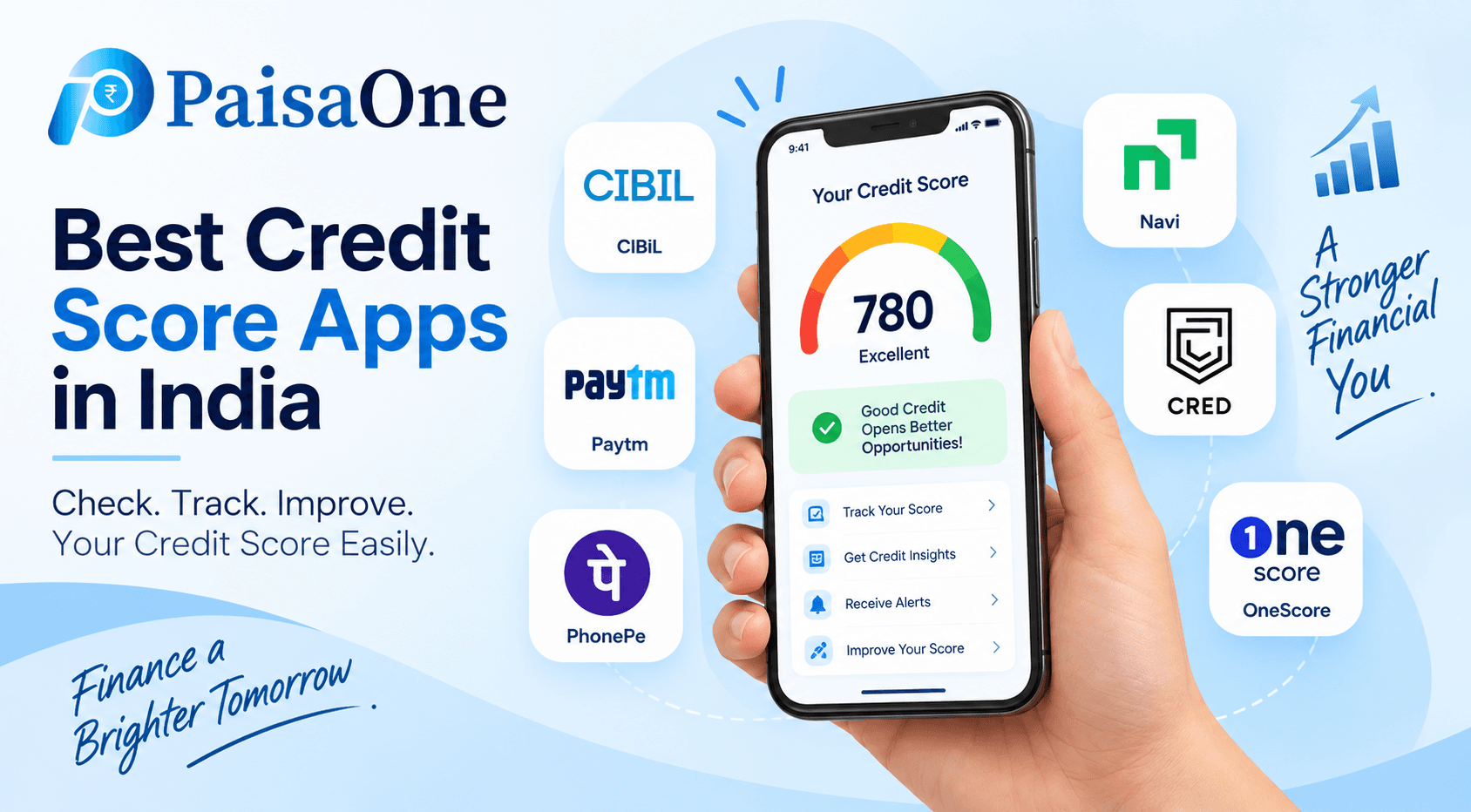
Checking your credit score used to mean filling out forms on a bureau website. Today you can do it in under two minutes on your phone. The catch is choice. There are dozens of credit score apps in India, and they do not all show the same number. Some show your CIBIL score, some show Experian, and some are really loan apps that use a free score check to start a sales conversation.
This guide compares the best credit score apps in India for 2026, groups them by what you actually need, and tells you which credit bureau each app reports. That last detail matters more than most people realise.
Quick answer: For the official report, use myCIBIL. For free, ad-free monthly tracking, OneScore is a strong pick. If your score needs work, GoodScore offers guidance on improving it. For a quick credit score check inside an app you already use, Google Pay is the simplest option.
Why the Bureau Behind the App Matters
India has four credit bureaus licensed by the Reserve Bank of India: TransUnion CIBIL, Experian, Equifax and CRIF High Mark. Every credit score app pulls its data from one or more of them.
Each bureau uses its own scoring model and receives data from lenders at slightly different times. So your Experian score on one app and your CIBIL score on another can differ by a few dozen points, and that is completely normal. It does not mean either app is wrong.
Here is why it matters in practice. When you apply for a loan or credit card, the lender pulls your report from a specific bureau, and CIBIL is the one most Indian banks rely on. If you have been tracking an Experian score and it looks healthy, your CIBIL score could still be lower. Before any important application, check the score from the bureau your lender uses. If you are unsure, ask the lender directly.
PaisaOne Free Credit Score Checker
PaisaOne offers a free credit score check with no hidden charges. You verify your identity with an OTP, and your score is ready in under a minute, no lengthy forms.
What sets it apart is what happens next. Along with your score, PaisaOne shows a plain-language breakdown of what's helping or hurting it, so you're not just staring at a number. Since PaisaOne is a marketplace, you can also see personal loan and credit card offers matched to your score from its lender network, all in the same place.
Use it for: a free score check plus a clear next step, whether that's fixing your report or comparing offers you actually qualify for.
You can check your score here: paisaone.com/credit-score
Best Credit Score Apps at a Glance
App features and bureau partnerships change. Confirm the bureau shown on the score screen inside each app.
Official Credit Bureau Apps
If you want the report straight from the source, go to the bureau itself. These are the most accurate options and the only ones where you can raise a dispute directly.
myCIBIL (TransUnion CIBIL)
This is the official app and website of TransUnion CIBIL, the bureau most banks check. You get your CIBIL score and full credit report, including every loan, credit card, repayment record and enquiry on your file. Under RBI rules, you are entitled to one free full report every calendar year. Paid subscriptions add frequent refreshes and alerts. If you spot an error, such as a loan you never took or a payment wrongly marked late, you can raise a dispute through CIBIL's own system.
Use it for: a final check before a big loan application, or fixing mistakes in your report.
Experian
Experian's official app gives you your Experian score and report, along with a breakdown of the factors affecting it and alerts when something changes. Many NBFCs and fintech lenders use Experian data, so it is worth checking if you borrow from them.
Equifax and CRIF High Mark
Both bureaus offer consumer access to your report, with Equifax providing the myEquifax app and CRIF High Mark offering access mainly through its website. CRIF data is often used by NBFCs and microfinance lenders. These are useful as a second opinion or if a specific lender tells you it uses them.
Best Free Apps for Regular Monitoring
OneScore
OneScore is built for one job: monitoring your credit health without clutter. According to its Play Store listing, it offers a free Experian score, alerts when your credit profile changes or a new enquiry appears, and a score planner to help you set improvement targets. It is known for a clean experience with no ads, which makes it a good choice if you want to track your score monthly without being pushed toward loans.
Use it for: passive, ongoing tracking and catching unexpected enquiries early.
GoodScore
GoodScore lets you check your CIBIL, Experian and CRIF High Mark scores in one place and focuses on helping you understand what is dragging your score down. The app highlights problem areas such as late payments or high credit utilisation and offers guidance on fixing them, with some services available on a paid basis.
Use it for: a score below 700 that you want to actively improve, and comparing bureaus side by side.
Payment Apps With a Built-In Score Check
These apps were not built for credit monitoring, but many people prefer them because the app is already on their phone.
Google Pay
Google Pay offers a free CIBIL score check inside the app. You enter your PAN and basic details, verify with an OTP, and see your score in about a minute. It is more about convenience than deep analysis, but for a quick look at your CIBIL number, it is hard to beat.
CRED
CRED is mainly a credit card bill payment app, but it also shows your credit score and tracks card due dates. If you hold several credit cards and already pay them through CRED, having your score in the same place helps you connect repayment habits with score changes. Check the score screen to see which bureau it reports.
Paytm
Paytm includes a credit score section within its wider app for UPI, recharges and bill payments. It works well for a basic check if you already use Paytm daily, though it offers less detail than dedicated monitoring apps.
Loan Marketplace and Lender Apps
Platforms such as Paisabazaar and BankBazaar let you check your score for free and then show loans and credit cards you may qualify for. Lender apps like Bajaj Finserv do something similar for their own customers. These are useful when you are ready to borrow, since you can see your score and your options together. Expect product offers alongside your score, and remember that seeing an offer is not the same as final approval.
How to Choose the Right Credit Score App
Start with your goal, then narrow down:
Applying for a loan soon? Use an app that shows the bureau your lender checks, usually CIBIL. myCIBIL or Google Pay are good choices.
Want ongoing tracking? A free monitoring app with alerts, such as OneScore, does the job.
Score below 700? Pick an app that explains what is hurting your score, like GoodScore, and check your full report for errors.
Want fewer apps on your phone? Use the score feature in a payment app you already have.
Beyond that, check three things before signing up: how often the score refreshes, what permissions the app requests, and whether its privacy policy explains how your data is used.
How to Stay Safe When Using Credit Score Apps
Your credit report holds sensitive information, so a little caution goes a long way.
OTP is non-negotiable. Every legitimate app verifies your identity with an OTP sent to your registered mobile. Avoid any app or site that promises your score using only your PAN.
Watch the permissions. A credit score app has no reason to need your contacts, photos or call logs.
Download from official stores only. Check the developer name matches the company before installing.
Expect some marketing. Many free apps earn money by showing loan and card offers. If calls or messages become excessive, you can usually opt out in the app settings.
Checking your own score is always a soft inquiry. It does not lower your credit score, however often you check.
What to Do After You Check Your Score
Once you know your number, put it to work. A score of 750 or above generally qualifies you for the best loan and credit card terms, so it is a good time to compare personal loan offers or credit cards across lenders. Between 650 and 749, focus on paying every bill on time and keeping credit card usage below 30% of your limit for a few months before applying. Below 650, review your full report carefully for errors and raise a dispute with the bureau if you find any.
Since July 2026, lenders report credit data to bureaus weekly, so on-time payments and closed loans show up on your report faster than before. That makes regular checks more useful. You can also check your CIBIL score for free on PaisaOne and see matching offers in one place.
Frequently Asked Questions
Which is the best app to check CIBIL score?
For the official CIBIL report, use myCIBIL, the app and website of TransUnion CIBIL. For a quick, free CIBIL score check, Google Pay is one of the simplest options. Many other apps show Experian or CRIF scores instead, so always confirm which bureau an app reports before relying on it for a loan application.
Why is my credit score different on different apps?
Different apps pull data from different credit bureaus, and each bureau uses its own scoring model and receives lender updates at different times. A gap of a few dozen points between an Experian score and a CIBIL score is normal. Compare scores from the same bureau when tracking changes over time.
Does checking my credit score on an app reduce it?
No. Checking your own score is a soft inquiry and has no effect on your credit score, even if you check every day. Only hard inquiries, made by lenders when you apply for a loan or credit card, can lower it slightly.
Are free credit score apps safe to use?
Well-known apps that verify your identity with an OTP and pull data from RBI-licensed bureaus are generally safe. Download only from official app stores, avoid apps that ask for unnecessary permissions like contacts or photos, and never use a service that shows your score without OTP verification.
How often should I check my credit score?
Once a month is a sensible habit for most people. Also check two to four weeks before applying for any loan or credit card, so you have time to fix errors or improve your utilisation. With weekly bureau reporting since July 2026, monthly checks now reflect recent activity more accurately.
Can I fix errors in my credit report through an app?
Disputes are handled by the credit bureau that holds the incorrect information. You can raise a dispute through the bureau's official app or website, such as myCIBIL for CIBIL errors. Some improvement apps guide you through the process, but the correction itself is made by the bureau and the lender that reported the data.

Divya
Divya Kumari is an SEO and Content Strategist with experience in organic traffic growth, topical authority building, and content-led SEO strategies. She specializes in creating user-focused content for finance and SaaS websites, helping brands improve visibility through structured content planning, internal linking, and search optimization techniques.