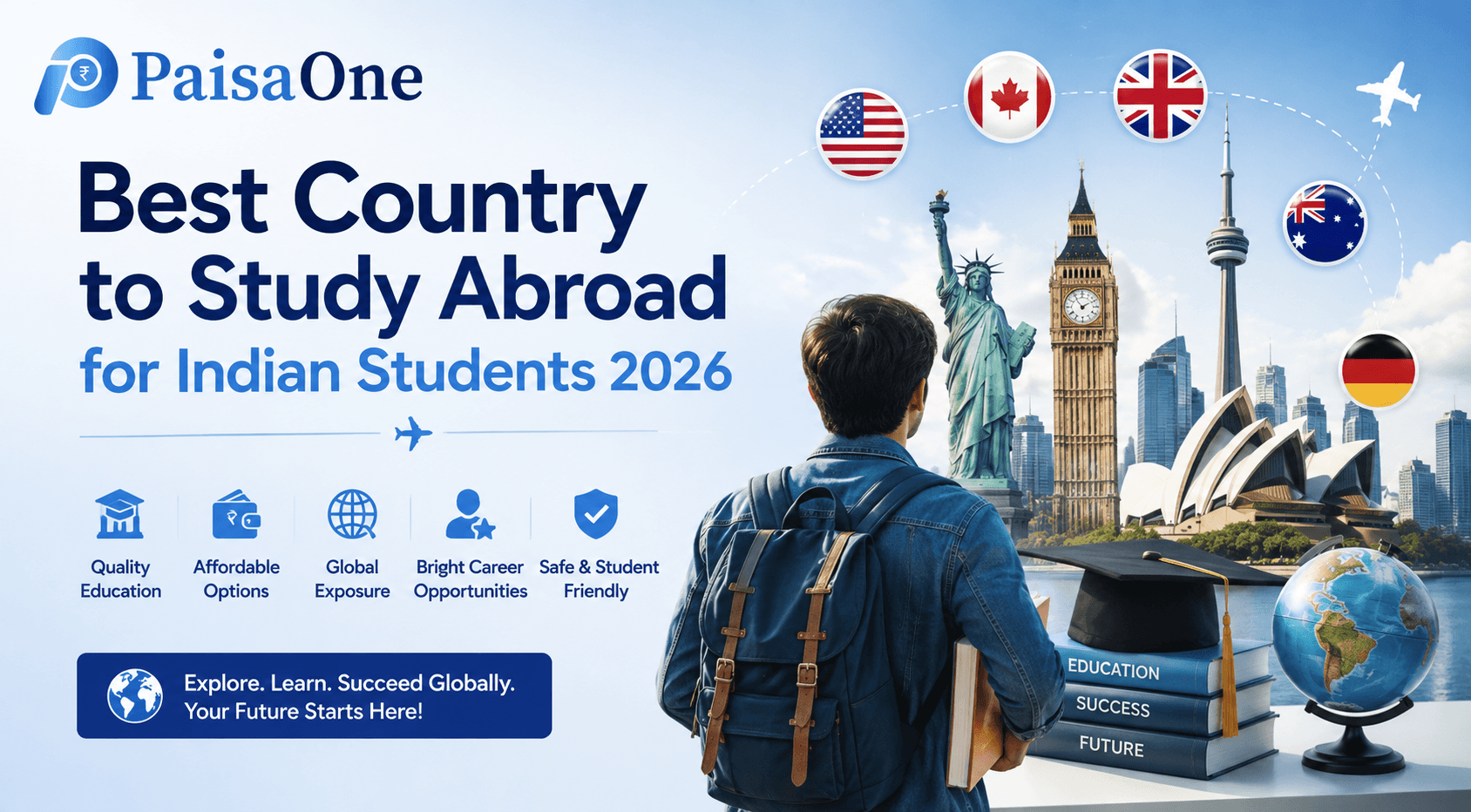
Best Country to Study Abroad for Indian Students 2026
Before you spend ₹15–20,000 on application fees, read this.
India's F-1 denial rate for the USA hit 61% in 2026, up from 53% in 2024. Canada's study permit rejection rate for Indian applicants reached 74%. Australia classified Indian applicants at Evidence Level 3, the highest-risk tier.
Most study abroad consultancies don't tell you this, they earn commissions on applications regardless of outcome. This guide doesn't.
What follows is an honest, data-driven comparison of the six best countries for Indian students in 2026, with all costs in Indian rupees, real visa odds, post-study work rights, and a section on how to actually fund the education.
The 2026 Visa Reality (Read Before Choosing)
Many countries have updated their student visa and immigration policies significantly for 2026. Canada has limited study permits to 437,000 for 2025 and 2026. The United Kingdom's Graduate Route visa will be reduced to 18 months for applications made from 2027. Australia has planned an international student intake limit of 295,000 for 2026.
What this means for your planning:
A visa rejection wastes ₹15–20,000 in application fees and delays your timeline by a full year. The expected value of expensive "Big 4" destinations (USA, Canada, UK, Australia) has declined, not because the education is worse, but because the probability of actually getting there has dropped significantly for Indian applicants.
This doesn't mean avoiding those countries. It means applying with backup countries ready, and calculating honest odds before spending money.
How to Choose: Start With YOUR Priority
Don't start with "which country is best." Start with what matters most to you.
Germany, Best for Zero Tuition and Strong PR
Annual cost in ₹: ₹11–15 lakh (living only; public university tuition = ₹0) Visa approval rate: ~98% for well-prepared applicants Post-study work: 18-month Job Seeker Visa PR pathway: Skilled Worker Visa after 2+ years employment
Germany is routinely cited as the cheapest country to study abroad for Indian students among high-quality destinations. Germany provides the most affordable education with zero tuition at public universities and living costs of €10,800–14,400 annually, approximately ₹11–15 lakh per year at current exchange rates (€1 = ₹105).
Top universities: TU Munich, RWTH Aachen, Heidelberg, Humboldt, Stuttgart
Best for: Engineering, STEM, computer science, cost-conscious students
Hidden costs in ₹ (before you start):
Blocked bank account: €11,208 = ₹1.18 lakh (required for visa; your money, held as proof)
TestDaF (if German-medium) or IELTS for English programs: ₹17,000
Visa application fee: ~₹9,500
Flight: ₹55,000–65,000
Honest caveat: Undergraduate programs at public universities are primarily in German. You'll need TestDaF or DSH language certification. English-taught PG programs are growing rapidly, at Master's level, Germany is more accessible for English speakers.
Germany is the best overall value: zero tuition, 98% visa approval, clear PR pathway. The same money now has a better ROI in Germany than in the USA or Canada given current rejection rates.
💡 Funding this: Education loan ₹15–30 lakh covers living costs in Germany. Compare lenders offering Germany-specific loans on PaisaOne.
Read More: How Much CIBIL Score Required for Personal Loan
Canada, Best for PR Pathway + Indian Community
Annual cost in ₹: ₹30–50 lakh (tuition ₹18–30 lakh + living ₹12–20 lakh) Visa approval rate: ~26% for Indian applicants (74% rejection in 2026) Post-study work: PGWP, up to 3 years PR pathway: Express Entry + Provincial Nominee, 3–5 year realistic timeline
Canada ranks among the best places to study abroad for Indian students because of how clearly the pathway from student visa to permanent residency is structured. The Post-Graduation Work Permit allows graduates to work in Canada for up to three years, and this work experience directly feeds into Express Entry and provincial nominee programs for PR.
Despite the cap, 137,608 Indian students were enrolled in Canadian institutions as of 2025. Canada introduced a cap on study permits in 2024, apply early and choose your institution carefully.
Top universities: University of Toronto, McGill, UBC, McMaster, Waterloo
Best for: Tech, healthcare, business; students with PR as the long-term goal
Hidden costs in ₹ (before first semester):
GIC (Guaranteed Investment Certificate): CAD 20,635 = ₹14 lakh (your money, locked for visa)
IELTS: ₹17,000
Study permit application: ~₹12,000
Flight: ₹50,000–60,000
The honest picture: Canada's rejection rate for Indian applicants is genuinely high. If applying for Canada, have Germany, Ireland, or New Zealand as simultaneously prepared backups.
💡 Funding this: Education loans up to ₹75 lakh available for Canadian universities. Moratorium covers your full study period, compare HDFC Credila, Avanse, Axis Bank on PaisaOne.
United Kingdom, Best for Speed (1-Year Master's)
Annual cost in ₹: ₹25–40 lakh (tuition ₹18–30 lakh + living ₹7–12 lakh) Visa approval rate: ~80%+ for well-prepared Indian applicants Post-study work: 2-year Graduate Route visa (applies made before end 2026); 18 months for 2027+ applications PR pathway: 5-year settlement route, less direct than Canada
Students applying before 31 December 2026 can still get the 2-year Graduate Route visa. Applications from 2027 may get an 18-month post-study work period. This is a significant policy change. If the UK is your target, applying for September 2026 intake locks in 2 years of post-study rights.
Top universities: Oxford, Cambridge, Imperial College, LSE, University of Manchester, Edinburgh
Best for: Students who want a fast, prestigious qualification and plan to work in India after; also good for finance and law
Hidden costs in ₹ (per year):
Immigration Health Surcharge (IHS): £776/year = ₹1 lakh/year
CAS (Confirmation of Acceptance for Studies) fee
Visa application: ~₹12,000
Flight: ₹55,000
The honest picture: 1-year Master's is genuinely efficient. Strong brand recognition globally. But the post-study work window is narrowing, so apply for the 2026 intake if the UK is the plan.
💡 Funding this: UK education loans upto 60 lakh. Compare SBI, HDFC Credila, and Prodigy Finance (no collateral option) on PaisaOne.
USA, Highest Career Ceiling If You Get the Visa
Annual cost in ₹: ₹35–65 lakh (tuition ₹28–50 lakh + living in metro) Visa approval rate: 39% (61% rejection rate for Indian F-1 applications in 2026) Post-study work: OPT 1 year + STEM OPT 3 years = up to 4 years PR pathway: H-1B lottery + EB-2/EB-3, 10–15 year wait for Indians
The USA offers the highest salaries but charges USD 35,000–60,000 in tuition for programs like computer science and engineering. For strong candidates targeting FAANG or top finance roles, the career ceiling remains unmatched.
The honest calculation:
High salary (if employed at top firm): ₹1–2 crore/year
Visa rejection rate: 61%
Expected value drops significantly once you multiply probability × outcome
H-1B lottery uncertainty adds further risk
Strategy if USA is your priority: Apply simultaneously to Germany, Ireland, or Canada as ready backups. Never apply USA-only in 2026.
💡 Funding this: US education loans up to ₹1.5 crore available. Compare SBI Global Ed-Vantage, Avanse, and MPower Finance on PaisaOne.
Australia, Best for Work Rights During Study + Lifestyle
Annual cost in ₹: ₹28–45 lakh/year Visa approval rate: Varies by state and program, Evidence Level 3 = higher scrutiny Post-study work: Temporary Graduate Visa (Subclass 485), 2 to 4 years Student intake cap: 295,000 for 2026
Australia can offer 2 to 4 years of post-study work depending on qualification level, and even longer if you studied in a regional area.
Students can work 48 hours per fortnight during semesters. Cities like Sydney, Melbourne, and Brisbane have strong student communities, quality universities, and globally respected degrees.
Best for: Students prioritising work rights during study, STEM, healthcare, business
💡 Funding this: Australia education loans ₹20–70 lakh, compare on PaisaOne.
Ireland, The Underrated Option (EU Access + English Medium)
Annual cost in ₹: ₹15–22 lakh/year Visa approval rate: ~90% Post-study work: 2-year Graduate Scheme EU access: Work across 27 EU countries post-graduation
The same money now has a better ROI in Germany, Ireland, or New Zealand than in the USA or Canada given current rejection rates.
Ireland offers English-medium education, strong tech industry connections (Google, Apple, Meta have EU HQs in Dublin), and a relatively uncrowded application environment compared to Canada or Australia.
Top universities: Trinity College Dublin, University College Dublin, NUI Galway
Best for: Budget-conscious students wanting EU job market access + English medium
💡 Funding this: Ireland education loans ₹15–40 lakh, compare on PaisaOne.
Hidden Costs Nobody Mentions (All in ₹)
Before calculating your education loan amount, add these:
These costs come before your education loan disburses. Fund them via personal loan or savings, education loans typically release after visa confirmation.
Read More: Pre-Approved Personal Loan Offers 2026
How to Fund Your Study Abroad (Loan Strategy)
Step 1: Pre-application expenses → Personal loan IELTS, GRE, application fees, visa fees = ₹30,000–₹1.5 lakh depending on the country. Take a personal loan at 11–14% for this, fast approval, no collateral, and education loans won't cover it.
Step 2: Post-visa confirmation → Education loan Once visa is confirmed, apply for the main education loan covering tuition + living + insurance.
Education loan amounts available by country:
Germany: ₹15–30 lakh
Canada: Up to ₹75 lakh
UK: ₹20–60 lakh
USA: Up to ₹1.5 crore
Australia: ₹20–70 lakh
Moratorium advantage: No EMI during study. Repayment starts 6–12 months after graduation, giving you time to find employment before payments begin.
Rate comparison matters more than you think: A 0.5% rate difference on ₹50 lakh over 7 years = ₹1.75 lakh in extra interest. Compare education loan rates from SBI, HDFC Credila, Axis Bank, and Avanse on PaisaOne before committing to any lender.
FAQ
Q: Which is the best country to study abroad for Indian students in 2026?
Germany is the best overall value: zero tuition, 98% visa approval, clear PR pathway. Germany, Canada, USA, UK, and Australia rank as top destinations, offering post-study work visas ranging from 18 months to 3 years. For the PR pathway, Canada leads. For speed, the UK leads. For career ceiling (if visa approved), USA leads. For budget + visa odds combined, Germany and Ireland lead.
Q: What is the cheapest country to study abroad for Indian students?
Germany is routinely cited as the cheapest high-quality study destination. Public universities charge zero tuition, students only cover living costs of ₹11–15 lakh per year. Ireland is the next most affordable English-medium destination at ₹15–22 lakh total per year.
Q: What is the visa rejection rate for Indian students in 2026?
USA: 61% F-1 rejection rate. Canada: 74% rejection for Indian applicants. Australia: Evidence Level 3 (highest-risk classification). Germany: ~98% approval for well-prepared applicants. UK: ~80%+. Ireland: ~90%.
Q: Which country gives the longest post-study work permit?
Canada's PGWP offers up to 3 years. Australia offers 2 to 4 years depending on your qualification. Germany provides an 18-month job seeker visa. USA STEM OPT extends to 3 years, but H-1B uncertainty limits long-term planning.
Q: Can I study abroad after 12th with an education loan?
Yes. Education loans for UG programs abroad are available from ₹20–75 lakh with a co-borrower, moratorium for study duration, and repayment starting 6–12 months post-graduation. Pre-application costs (IELTS, visa) are better funded via personal loan. Compare both on PaisaOne.
Q: Should I study in India or abroad?
Study in India only if you have admission to a top-20 Indian institute AND your career goals are primarily India-focused. For global careers, PR pathways, and research exposure, studying in Germany, Ireland, or Canada delivers better long-term ROI than mid-tier Indian institutions, provided the EMI from your education loan is affordable relative to expected post-graduation salary.

Divya
Divya Kumari is an SEO & Content Strategist with experience in organic traffic growth, topical authority building, and content-led SEO strategies. She specializes in creating user-focused content for finance and SaaS websites, helping brands improve visibility through structured content planning, internal linking, and search optimization techniques.