Different Types of Personal Loans Explained, Which One Suits You?
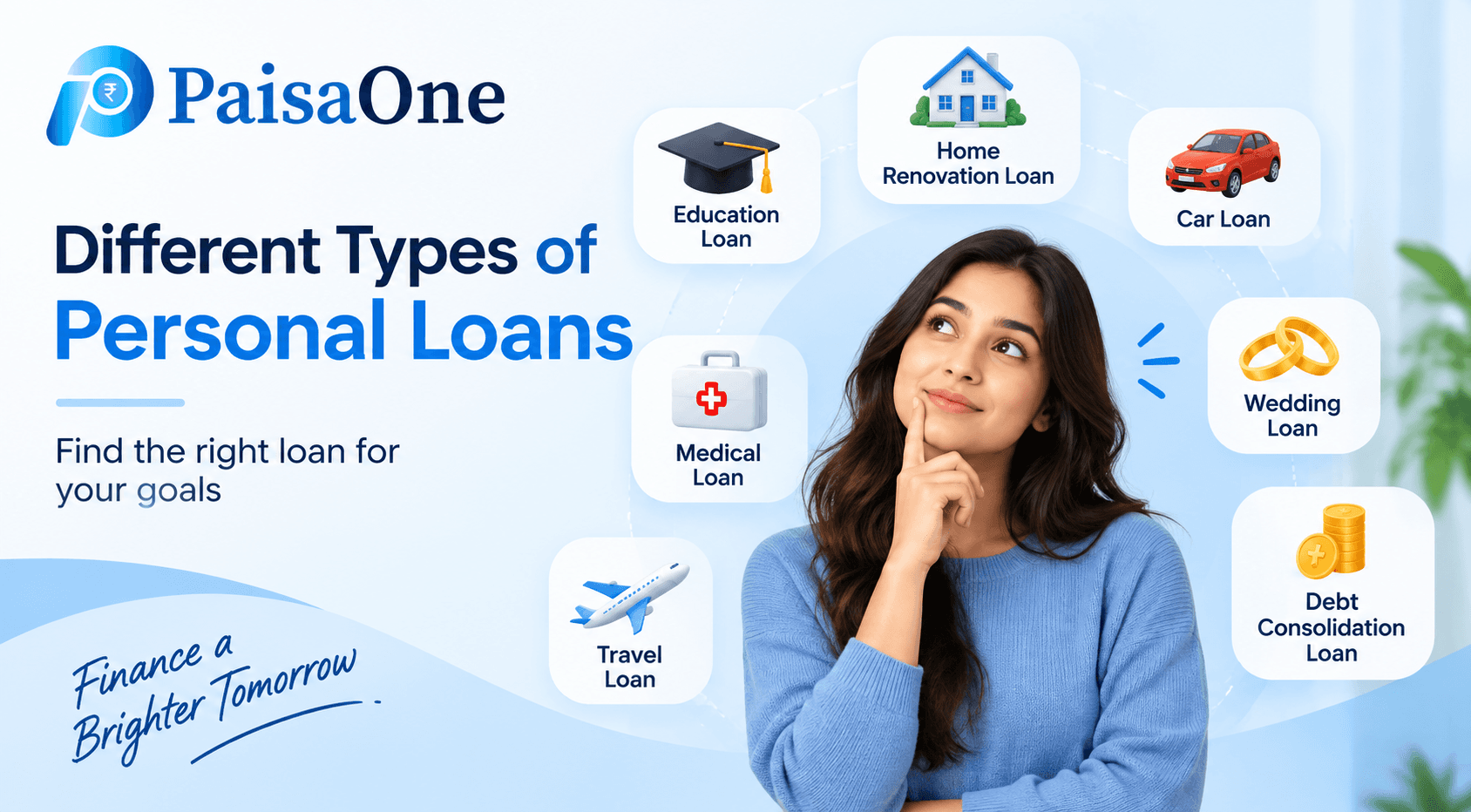
A personal loan is not one-size-fits-all. The market now offers over 10 distinct types, each with different interest rates, approval timelines, eligibility rules, and best use cases. A wedding loan works differently than a debt consolidation loan. A flexi personal loan functions entirely differently from a traditional fixed-term loan. A secured loan backed by gold costs half what an unsecured loan costs. Knowing which type exists for your situation can save you months of time and thousands of rupees in interest.
This guide walks you through every type of personal loan available in India as of September 2026, explains the pros and cons of each, and helps you narrow down which one is right for your situation.
The Two Structural Splits First
Before you pick a purpose-based type (wedding, medical, travel), you first decide on two structural dimensions.
First decision: Secured or unsecured? An unsecured loan needs no collateral, it's approved purely on your credit score and income. An unsecured loan costs more in interest (10–24% p.a.) but approves faster (24–72 hours). A secured loan requires you to pledge an asset, gold, a fixed deposit, insurance policy, or property. It costs far less (8–15% p.a.) but takes longer to approve and you risk losing the collateral if you default.
Second decision: Flexi or fixed term? A fixed-term loan is the traditional type: the bank gives you a lump sum upfront, you repay it in fixed EMIs over a set tenure. A flexi personal loan gives you a pre-approved credit line (say ₹2–5 lakh) from which you withdraw funds as needed and repay anytime. Flexi loans are the 2026 game-changer, interest is charged only on what you use, not the full sanctioned limit, and you have zero foreclosure charges.
Once you decide these two structural choices, then you pick a purpose-based type (if relevant).
Secured vs Unsecured Personal Loans
Unsecured Personal Loans (No Collateral)
This is the most common type. You borrow based on your creditworthiness alone, no asset required. Interest rates run 10 to 24 percent per annum depending on your CIBIL score, income, and employer. Approval happens within 24 to 72 hours for most digital lenders and banks. Documentation is minimal, PAN card, Aadhaar, salary slips, and bank statements suffice.
Best for: Salaried professionals and self-employed individuals with a CIBIL score of 700 or above, no collateral to pledge, and need funds quickly.
Secured Personal Loans (Collateral Required)
You pledge an asset, gold, fixed deposit, insurance policy, securities, or property, and the lender lends based on 70–90% of that asset's value. Interest rates drop dramatically to 8–15 percent per annum because the lender's risk is low. Loan amounts can be much higher since collateral backs the loan.
The approval timeline is longer: gold loans approved within 1–3 days, FD loans within 5–7 days, property-backed loans within 15–30 days. If you default, the lender has the right to sell the collateral to recover their money.
Best for: Borrowers who need large amounts and want the lowest interest rate, those with low CIBIL scores but valuable assets, or anyone comfortable pledging an asset to save money.
Flexi vs Fixed-Term Personal Loans
Fixed-Term Personal Loans (Traditional)
The traditional personal loan: the bank approves a set amount, disburses it to your account, and you repay it in fixed EMIs over a set tenure (12–60 months). You pay interest on the full borrowed amount for the entire tenure. Once you've repaid it, the loan is closed.
Simple, predictable, no surprises. Interest rates don't change unless you opt for a floating-rate product.
Best for: Planned expenses where you know the exact amount and timeline, and prefer straightforward repayment without flexibility.
Flexi Personal Loans (Revolving Credit Line)
This is the innovation gaining massive traction in 2026. The bank approves a credit limit (say ₹3 lakh) and you can withdraw any amount, anytime, up to that limit. Interest is charged only on what you withdraw, not the entire sanctioned limit. You can repay anytime and re-access the limit automatically.
Example: You have a ₹5 lakh flexi limit. In month 1, you withdraw ₹1 lakh for a medical expense and repay it in 2 months. In month 4, you withdraw ₹2 lakh for a holiday and repay it over 6 months. In month 10, your limit automatically restores and you can withdraw again. You pay interest only on the actual amounts used.
Most flexi loans charge zero foreclosure fees, you can repay early without penalties. Lenders like IDFC FIRST, Airtel, HDFC, and newer fintechs now offer flexi loans as a core product.
Best for: Unpredictable cash flows, sequential needs (different expenses across different months), emergencies, or anyone who wants a financial safety net without paying for money they don't use.
Purpose-Based Personal Loans
Wedding/Marriage Loans
Interest Rate: 12–18% p.a. | Amount: ₹2–15 lakh | Tenure: 12–60 months | Approval: 3–5 days
Designed specifically for Indian weddings, covering venue, catering, décor, jewellery, travel, honeymoon, and photography. Some lenders offer a "top-up mid-wedding" feature, if your actual costs exceed the sanctioned amount, you can request additional funds without a full reapplication.
Best for: Anyone getting married within 3–12 months who wants a dedicated product with expedited approval and flexibility.
Medical Emergency Personal Loans
Interest Rate: 12–18% p.a. | Amount: ₹50K–₹10L | Tenure: 12–48 months | Approval: 4–24 hours (fastest)
No lengthy documentation. Hospitals often provide letters detailing treatment costs, and lenders accept this as sufficient. Disbursal can happen within hours, making it ideal for urgent surgeries or treatments you can't postpone. Digital lenders particularly excel here, some medical loans approve and disburse within 4 hours.
Best for: Unexpected medical bills, surgeries, treatments where speed matters.
Travel Personal Loans
Interest Rate: 12–16% p.a. | Amount: ₹50K–₹10L | Tenure: 9–60 months | Approval: 3–5 days
Covers international and domestic travel, flights, hotels, packages, visas, and travel insurance. Some lenders offer seasonal rates, slightly lower rates during monsoon or winter months when fewer people travel.
Best for: Holiday enthusiasts whose travel plans exceed credit card limits or who want to preserve credit card balance for other needs.
Home Renovation/Improvement Loans
Interest Rate: 11–16% p.a. | Amount: ₹1–10L | Tenure: 12–60 months | Approval: 3–7 days
Used for interior redesign, construction work, furniture, painting, modular kitchens, flooring, etc. Interest rates are slightly lower than general personal loans because lenders view home renovation as a semi-permanent asset improvement.
Best for: Homeowners who want to upgrade without accessing a home equity loan or home improvement loan.
Debt Consolidation Personal Loans
Interest Rate: 10–16% p.a. | Amount: Variable (based on existing debt) | Tenure: 12–60 months | Approval: 3–7 days
Used to repay multiple debts: credit card balances (36–42% revolving interest), small NBFC loans, gold loans, and personal loans. Consolidating multiple high-interest debts into a single 12–14% personal loan can save thousands of rupees annually.
Example: You have ₹2L credit card debt at 42%, ₹1.5L NBFC loan at 20%, and ₹80K small personal loan at 18%. Consolidating into a single ₹3.8L personal loan at 13% saves roughly ₹18,000–₹25,000 in annual interest.
Best for: Anyone juggling 3+ debts at varying rates who wants to simplify repayment and reduce total interest.
Top-Up Personal Loans
If you're an existing customer of a bank and have repaid a previous loan consistently without defaults, the bank may proactively offer you a "top-up" personal loan. This is additional credit disbursed instantly on top of your existing relationship.
A top-up loan typically offers an interest rate 1–2% lower than a new personal loan (since the bank trusts your repayment history), disburses within 24 hours, and requires zero documentation beyond your existing KYC.
Example: You took a ₹5 lakh personal loan from HDFC Bank 2 years ago and repaid it on time. HDFC proactively offers you a ₹2 lakh top-up at 10% instead of the 11.5% you'd get as a new borrower.
Best for: Existing bank customers needing quick funds at the lowest rate.
Pre-Approved/Instant Personal Loans
Some banks and digital lenders pre-approve loans for eligible customers based on their credit profile and income. You simply approve the offer in your banking app or through an SMS, and the funds hit your account within hours or minutes.
No application process, minimal documentation, and instant money. The catch: these are typically offered to existing customers or high-income individuals, and loan amounts are capped (usually ₹1–3 lakh).
Best for: Extreme emergencies where speed is the only priority.
Joint Personal Loans
A personal loan with a co-applicant (spouse, parent, sibling, business partner). The lender considers both incomes for eligibility and loan amount, allowing you to borrow more. Interest rates are typically 0.5–1% lower because two guarantors reduce the lender's risk.
The downside: both co-applicants are equally liable. If one person defaults, the lender can recover from either of you.
Best for: Married couples with combined income, business partners, or anyone needing higher loan amounts.
How to Choose the Right Type
Step 1: Urgency. If you need money today or tomorrow, instant pre-approved loans or medical emergency loans are best. If you have 3–6 months, you can shop for the best rates across secured and unsecured options.
Step 2: Purpose. Is it a wedding, medical emergency, travel, home renovation, or debt consolidation? If so, look for a purpose-based loan first, they often approve faster and cheaper.
Step 3: Collateral. Can you pledge an asset? If yes, a secured loan saves 5–9% in interest. If not, stick with unsecured.
Step 4: Cash Flow. Is your need a one-time (wedding) or recurring (medical expenses across several months)? One-time = fixed-term. Recurring or unpredictable = flexi.
Step 5: Compare. Compare all types across 50+ lenders on PaisaOne to see rates, eligibility, and approvals timelines. Check your CIBIL score for free before applying.
Frequently Asked Questions
Which type of personal loan has the lowest interest rate?
Secured personal loans have the lowest rates: 8–15% per annum. Among unsecured types, top-up loans and pre-approved offers to existing bank customers have rates 1–2% lower than new loans. Purpose-based loans (wedding, medical, travel) price the same as general unsecured loans at 10–16%.
What is the fastest personal loan type to get approved?
Pre-approved instant personal loans disburse in minutes to a few hours. Medical emergency loans via digital lenders approve within 4–24 hours. Digital lenders generally approve faster than traditional banks. Secured loans backed by property take 15–30 days.
Is flexi personal loan available from all banks?
Not yet. As of September 2026, IDFC FIRST Bank, HDFC Bank, Axis Bank, Airtel Finance, and select digital lenders offer flexi loans. Traditional public sector banks like SBI are slower to launch flexi products. Check PaisaOne's personal loan page to see which lenders in your area offer flexi loans.
Can I switch from a fixed-term loan to a flexi loan?
Not directly. But you can repay your fixed-term loan and then apply for a flexi loan. If you're an existing customer and repaid the fixed loan on time, the bank may offer you a flexi top-up instantly. Many banks now offer the option to convert an existing fixed loan to flexi, check with your lender.
What happens if I default on a purpose-based loan like a wedding loan?
A wedding loan is treated like any other personal loan in terms of default. Missing payments results in late fees, interest at your card's revolving rate (if applied), negative CIBIL reporting, and potential legal recovery by the lender. From July 2026, defaults are reported to credit bureaus within 7 days under RBI's weekly credit reporting mandate.
Is a joint personal loan better than a single-applicant loan?
A joint loan offers higher eligibility and 0.5–1% lower interest. The downside: both co-applicants are equally liable. If one person defaults, the other is responsible for full repayment. Use a joint loan only if both co-applicants can reliably repay.
Divya
Divya Kumari is an SEO & Content Strategist with experience in organic traffic growth, topical authority building, and content-led SEO strategies. She specializes in creating user-focused content for finance and SaaS websites, helping brands improve visibility through structured content planning, internal linking, and search optimization techniques.