No-Cost EMI Explained: The Real Mechanics, Hidden Charges & When It Actually Saves Money
You're browsing Amazon for a ₹50,000 smartphone. The price catches your eye. You're about to close the tab when you see it: "Available on No-Cost EMI."
Suddenly, the phone seems affordable. ₹4,167 per month for 12 months. No interest. Problem solved.
But a question nags at you: How is this possible? Banks don't give out interest-free loans. Someone's paying for that interest. If it's not you, who is it? And if it's hidden somewhere, how much are you actually paying?
If you've wondered this, you're not paranoid, you're thinking clearly. And this guide will answer every question you have.
What exactly is "No-Cost EMI"? (The Answer Might Surprise You)
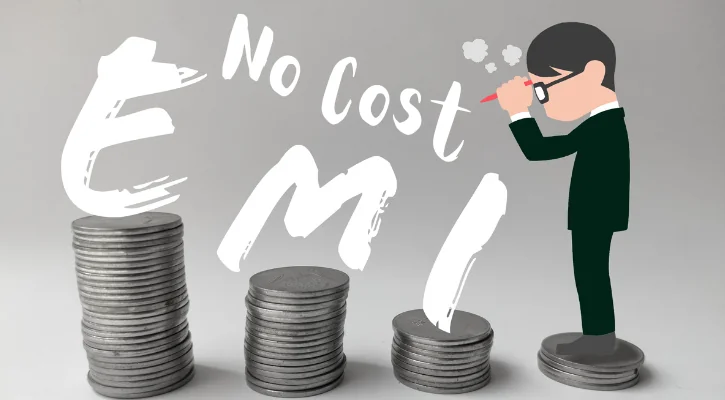
The simple definition: No-cost EMI is a financing option that lets you buy something today and pay for it in equal monthly installments without visible interest charges.
The catch: The interest doesn't disappear. It's just hidden.
The Reserve Bank of India made this official back in 2013 with a circular stating that zero-interest lending doesn't exist. Banks can't charge zero interest, it's mathematically impossible for them. So when a product says "no-cost EMI," it's really saying "we've hidden the cost in a way that doesn't show up as interest."
Here's the reality: In a no-cost EMI, the interest is still calculated by the bank. But instead of charging it to you, the cost is absorbed by the retailer, built into the price, or charged as fees. You see ₹0 interest on your bill, but you pay the cost anyway, just not labeled as interest.
Why is this a thing? Because psychologically, "no-cost" is way more appealing than "15% interest," even if both cost you the same amount. It's a marketing strategy that works.
The 3 Ways Retailers Hide the Cost (And How to Spot Each One)
Understanding these three methods is crucial because they affect your total cost differently. Let me show you with real numbers.
Method 1: Discount Offset (The Most Honest Approach)
The retailer gives you an upfront discount equal to the interest you'd pay. Then they take that discount away when you choose no-cost EMI.
Real example: A ₹50,000 smartphone
- If you pay cash: You get a ₹3,000 discount → Final price: ₹47,000
- If you choose no-cost EMI: No discount → Final price: ₹50,000
- Your actual cost on EMI: ₹50,000 (you paid ₹3,000 more by choosing EMI)
Who pays the interest? Technically, you do, by forfeiting the discount. The bank still gets the interest; it just comes from lost savings rather than a separate charge.
Where you see this: Premium brands like Apple, Samsung, OnePlus. High-end electronics during mega-sales.
Transparency level: High (most honest method). The discount loss is visible if you compare prices.
Method 2: Price Inflation (The Sneaky Approach)
The retailer raises the MRP to include the interest cost within the product price itself. You don't see the markup because it looks like the normal price.
Real example: Same ₹50,000 smartphone
- Original MRP: ₹48,500
- No-cost EMI MRP: ₹50,000 (includes ₹1,500 hidden interest)
- Your cost on EMI: ₹50,000 (you just don't know ₹1,500 is interest)
The problem? You don't see the markup. It looks like a normal price. If you compare across three e-commerce sites, one might show ₹48,500 and another ₹50,000, but the ₹50,000 site just inflated it for no-cost EMI. You'd never know unless you actively compare.
Where you see this: Electronics on e-commerce sites, appliances, furniture.
Transparency level: Low (most deceptive). The inflated cost is hidden in plain sight.
How to spot it: Compare prices across multiple sites. If one site's "no-cost EMI price" is ₹2K higher than another site's cash price, you've found price inflation.
Method 3: Fee Bundling (The Most Common Approach)
The bank doesn't charge visible interest, but instead adds processing fees, insurance, and GST. Individually, each fee seems small. Together, they replicate the interest amount.
Real example: ₹50,000 smartphone on a credit card no-cost EMI
| Component | Cost |
|---|---|
| Principal | ₹50,000 |
| Processing fee | ₹300 |
| Insurance (forced) | ₹500 |
| GST on fees (18%) | ₹144 |
| Total paid | ₹50,944 |
You see "₹0 interest," but you paid ₹944 in fees. Effective cost increase: 1.9%. Not huge, but add it across 5 no-cost EMIs, and you're looking at ₹5K+ in hidden fees.
Where you see this: Credit card EMIs, bank-partnered EMI products.
Transparency level: Medium (fees are mentioned in terms, but in small print).
Read More: Loan Against FD: Interest Rates, Benefits and How to Apply
The Hidden Costs No One Talks About (But You'll Pay)
Even beyond the three methods above, there are additional costs lurking in no-cost EMI schemes:
1. GST on Interest (₹630–₹1,260 on a ₹50K purchase)
Even if the bank "waives" interest, 18% GST is still charged on the waived amount. This isn't shown as a line item, it's embedded.
Real calculation:
- Interest on ₹50K at 12% for 12 months: ₹2,700
- GST on ₹2,700 (18%): ₹486
- Total hidden GST cost: ₹486
Not huge per purchase, but multiply by 3–4 EMIs per year, and you're paying ₹1,500+.
2. Credit Limit Blocking (Psychological Cost)
When you buy on no-cost EMI via credit card, the full ₹50,000 is deducted from your credit limit. It's restored only as you pay EMIs.
Example: Your card has a ₹2,00,000 limit. You buy ₹50,000 on no-cost EMI.
- Remaining limit: ₹1,50,000
- After 1 month payment: ₹1,54,167 (not ₹1,50,000 because ₹4,167 EMI added back)
- Your limit is progressively restored, but for 12 months, your available credit is reduced
Impact: You can't use that credit elsewhere. If an emergency needs ₹40K, you can only access ₹1,50,000 instead of ₹2,00,000.
3. Early Repayment Penalty (₹1,000–₹2,500 if you prepay)
Some banks charge a 2–5% penalty if you clear the EMI early. This removes flexibility.
Example: You get a bonus and want to clear ₹50K EMI in month 6 instead of month 12.
- Remaining EMIs: 6 × ₹4,167 = ₹25,000
- Penalty (3%): ₹750
- Total paid to clear early: ₹25,750 instead of ₹25,000
It's not huge, but it discourages prepayment and locks you in.
4. Late Payment Penalties (1–3% per month)
Miss a single EMI? The penalty compounds.
Example: Your ₹4,167 EMI is due on the 15th. You miss it.
- Late fee: 1–3% = ₹42–₹125
- Penal interest: 18–24% p.a. = ₹625/month
- Your next payment: ₹4,917 instead of ₹4,167
Miss two EMIs, and the amounts spiral. Miss three, and your credit score tanks.
5. Lost Upfront Discounts (₹2,000–₹5,000 commonly)
This is the most significant hidden cost but often overlooked because it's not charged, it's simply not given.
Real scenario: A store runs a Diwali sale.
- Standard price: ₹50,000
- Cash payment discount: ₹5,000 → You pay ₹45,000
- No-cost EMI: ₹50,000 (no discount available)
By choosing no-cost EMI, you lose the ₹5,000 discount. That's 10% more you're paying.
No-Cost EMI vs. Alternatives: Which Actually Saves Money?
Let me show you real numbers for a ₹50,000 smartphone purchase across all methods:
| Payment Method | Cost Breakdown | Total Paid | Extra Cost vs. Cash | Use When |
|---|---|---|---|---|
| Cash (with discount) | ₹50K - ₹3K = ₹47K | ₹47,000 | ₹0 | You have cash & get discount |
| No-Cost EMI (discount offset) | ₹50K (no discount) | ₹50,000 | +₹3,000 | Need to spread payment |
| No-Cost EMI (fee method) | ₹50K + ₹944 fees | ₹50,944 | +₹3,944 | Banks prefer; more hidden |
| Regular EMI (12 months) | ₹50K + ₹3,500 interest | ₹53,500 | +₹6,500 | Want transparent interest |
| Personal Loan EMI | ₹50K + ₹5K interest | ₹55,000 | +₹8,000 | Need flexible terms |
| BNPL (Buy Now Pay Later) | ₹50K | ₹50,000 | +₹3,000 | Need flexibility; no interest |
Verdict:
- Cheapest: Cash with discount (₹47K)
- Best if no cash: BNPL or no-cost EMI with discount offset (₹50K)
- Avoid: Regular EMI (₹53.5K) unless you need longer repayment
Is No-Cost EMI Really "No Cost"? (The Honest Answer)
Short answer: No.
The proof: You always pay. Either through:
- Lost discounts (you don't get the ₹3K off)
- Inflated prices (the phone costs ₹2K more here)
- Hidden fees (₹944 in fees instead of visible interest)
- Opportunity cost (the ₹50K you could have invested instead)
The RBI itself confirmed in 2013 that zero-interest lending doesn't exist. The interest is there; it's just redistributed.
Who actually benefits?
- Retailer: Sells more high-value items because monthly ₹4,167 feels more affordable than ₹50,000 upfront
- Bank: Gets interest through fees or discounts; customers are happier than seeing "15% interest"
- Customer: Gets to buy now and pay later without crushing their budget
When it's genuinely beneficial: When you need the product NOW, have stable income to cover EMIs, and the discount-offset method is used (most transparent).
When it costs you: When you lose a bigger upfront discount, already have multiple EMIs active, or have income uncertainty.
When to Use No-Cost EMI (And When to Absolutely Avoid It)
Use No-Cost EMI When:
✅ You need the product and have stable income✅ The discount-offset method is used (most transparent)✅ No better upfront discount is available✅ You want to build credit history (on-time payments help CIBIL)✅ Purchase is ₹30K+ (fees justify the convenience)
Avoid No-Cost EMI When:
❌ You have cash and an upfront discount is available (you lose ₹2K–₹5K)❌ You already have 2+ EMIs active (credit limit pressure)❌ Your income is irregular or uncertain❌ You're buying a luxury/non-essential item (impulse risk)❌ Early repayment penalty is high (removes flexibility)
Red Flags for Bad No-Cost EMI Deals:
🚩 Price is significantly higher than competitors (price inflation)🚩 No option to get upfront discount (you're forced to lose it)🚩 Multiple hidden add-ons (insurance, processing fees)🚩 Retailer discourages comparing prices across sites🚩 "Limited time offer" pressure (classic sales tactic)
The Bottom Line
No-cost EMI is not "no-cost." It's "cost-hidden."
The interest is real. Someone pays for it. Usually, it's you, just indirectly through lost discounts, inflated prices, or hidden fees.
That said, it's not a bad option. If you need something now, have stable income, and the discount-offset method is used, no-cost EMI lets you buy without crushing your budget. You'll pay 1–3% more than upfront, but spread over 12 months instead of paying ₹50,000 immediately.
The key: Don't use it mindlessly. Understand the method being used. Compare prices across sites. Check for lost discounts. Read the terms for early repayment penalties and late payment fees.
And most importantly: Use it for products you actually need, not luxury items you're impulsively buying because the monthly payment "seems affordable."
Affordability is a psychological trick. Just because you can pay ₹4,167/month doesn't mean you should pay ₹50,000 for something that costs ₹47,000 with a discount.
Use PaisaOne's EMI calculator to see the real total cost including all hidden charges. Compare your options, cash, no-cost EMI, regular EMI, personal loan, BNPL. Then decide which saves you the most money.
That's the only way to make no-cost EMI work for you instead of against you.
Divya
Divya Kumari is an SEO & Content Strategist with experience in organic traffic growth, topical authority building, and content-led SEO strategies. She specializes in creating user-focused content for finance and SaaS websites, helping brands improve visibility through structured content planning, internal linking, and search optimization techniques.